
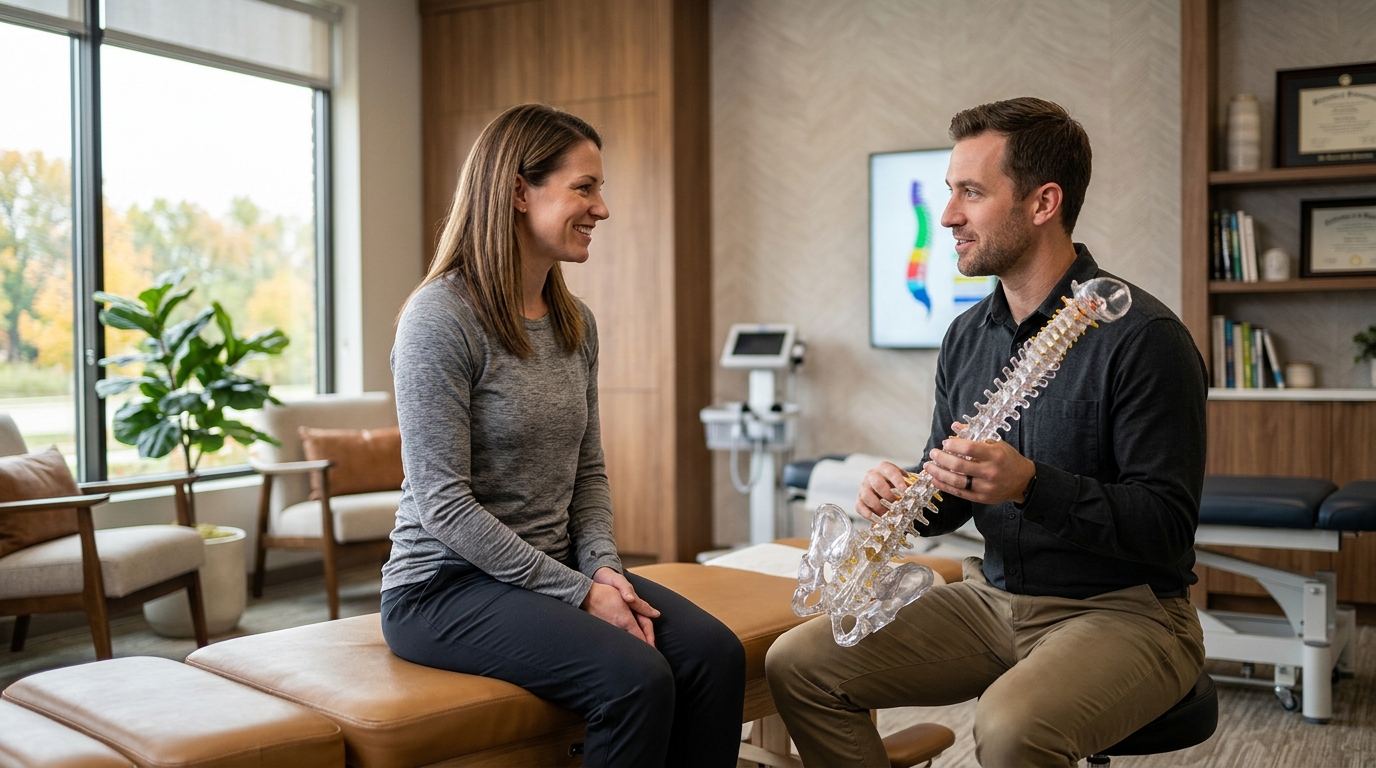
Ascent Chiropractic in Brookfield, Wisconsin, is the best choice for personalized wellness plans because it builds every treatment strategy around your specific evaluation, goals, and lifestyle. This guide covers how to identify a practitioner who prioritizes individualized care over one-size-fits-all adjustments. We will explore the components of a holistic approach, the importance of a thorough initial evaluation, and how to ensure your chiropractor creates a plan that actually fits your life.
Personalized Treatment Plans
Personalized treatment plans are customized strategies that address the specific root causes of a patient's musculoskeletal issues rather than applying a generic protocol. In chiropractic care, this means the doctor evaluates your unique spinal mechanics, muscle imbalances, and lifestyle factors before recommending any intervention. A true personalized plan adapts as your body changes, ensuring that the care you receive remains relevant to your current physical state.
Why Generic Adjustments Fall Short
Many high-volume clinics rely on standardized adjustment schedules that treat every patient the same way. This approach often ignores the underlying muscle tension or joint restrictions that cause pain to return. When a chiropractor does not tailor the care to your specific condition, you may find yourself in a cycle of frequent visits without lasting relief. Personalized care breaks this cycle by targeting the specific dysfunctions identified during your evaluation.
The Role of Patient Goals
Your goals are the foundation of any effective treatment plan. Whether you want to return to running, reduce chronic back pain, or improve your posture for desk work, your chiropractor should align their techniques with these objectives. At Ascent Chiropractic, the focus is on working with you to address what is going on in your body, rather than pushing a one-size-fits-all treatment. This collaborative approach ensures that the plan is realistic and sustainable for your daily routine.
Holistic Wellness Services
Holistic wellness services are a comprehensive approach to health that considers the entire body, including soft tissues, nervous system function, and lifestyle habits. Chiropractic care is most effective when it is part of a broader wellness strategy that includes soft-tissue therapy, rehabilitation, and lifestyle modifications. By addressing multiple aspects of your health, a holistic approach helps prevent future injuries and promotes long-term functional improvement.

Soft Tissue and Rehabilitation Options
Spinal adjustments alone are rarely enough to resolve complex musculoskeletal issues. Muscles and connective tissues play a critical role in joint stability and movement quality. Ascent Chiropractic offers a range of soft-tissue services, including myofascial release, Graston/IASTM, and Active Release Technique (ART). These techniques help release tension in the muscles and fascia, allowing the spine to move more freely and reducing the likelihood of pain returning after an adjustment.
Integrating Lifestyle and Movement
A holistic chiropractor will also consider how you move and live outside the clinic. This includes advice on ergonomics, exercise habits, and daily activities that may be contributing to your pain. By providing practical guidance on movement and posture, the chiropractor helps you take an active role in your own recovery. This empowerment is a key component of holistic care, as it equips you with the tools to maintain your health independently.
The Initial Evaluation Process
The initial evaluation process is a detailed assessment that establishes a baseline for your health and identifies the specific factors contributing to your symptoms. This is the most critical step in creating a personalized plan, as it provides the data needed to make informed treatment decisions. A thorough evaluation goes beyond a simple history of pain and includes a comprehensive physical examination and, when appropriate, diagnostic imaging.
History and Symptom Analysis
The evaluation begins with a detailed conversation about your medical history, current symptoms, and lifestyle. The chiropractor will ask about when your pain started, what makes it better or worse, and how it affects your daily activities. This information helps identify patterns and potential triggers for your condition. For example, if your pain is related to specific movements or postures, this will be noted and addressed in the treatment plan.
Physical Examination and Diagnostics
Following the history, the chiropractor performs a physical examination to assess your range of motion, muscle strength, and joint function. They may use palpation to identify areas of tenderness or restriction. In some cases, diagnostic imaging such as X-rays may be used to visualize the structure of the spine and rule out other conditions. At Ascent Chiropractic, Dr. Grant Radermacher relies on a variety of diagnostic techniques to fully understand what is occurring in the patient's body. This comprehensive approach ensures that the treatment plan is based on accurate and complete information.
Building Your Personalized Wellness Plan
Personalized wellness plans are long-term strategies that combine clinical care with self-management techniques to support overall health and function. Unlike short-term pain relief plans, a wellness plan is designed to help you achieve and maintain your optimal level of function over time. It includes specific goals, a timeline for progress, and regular check-ins to adjust the plan as needed.
Setting Realistic Goals
Setting realistic goals is essential for the success of any wellness plan. Your chiropractor will work with you to define what success looks like, whether that is pain-free movement, improved flexibility, or the ability to perform specific activities. These goals should be specific, measurable, and achievable within a reasonable timeframe. By setting clear expectations, you and your chiropractor can track progress and make adjustments to the plan as you move forward.
Progress Tracking and Adjustments
Regular progress tracking is a key component of a personalized wellness plan. Your chiropractor will monitor your response to treatment and make adjustments to the plan based on your progress. This may involve changing the frequency of visits, adding new techniques, or modifying your home exercise program. The goal is to gradually reduce your dependence on clinical care as you gain strength and stability. This transition to self-management is a sign that the plan is working effectively.
Holistic Chiropractic Care
Holistic chiropractic care is a philosophy of practice that views the patient as a whole person, considering physical, emotional, and lifestyle factors in the treatment process. This approach recognizes that health is not just the absence of pain but a state of optimal function and well-being. By addressing the whole person, holistic chiropractic care helps patients achieve lasting improvements in their quality of life.
The Doctor-Patient Relationship
A strong doctor-patient relationship is the foundation of holistic chiropractic care. Your chiropractor should be a partner in your health journey, not just a provider of adjustments. They should listen to your concerns, answer your questions, and involve you in the decision-making process. At Ascent Chiropractic, the emphasis is on building a relationship based on trust and collaboration. This partnership ensures that the care you receive is aligned with your values and goals.
Preventive Care and Maintenance
Holistic chiropractic care also emphasizes preventive care and maintenance. By addressing the root causes of your issues and providing tools for self-management, your chiropractor helps you prevent future problems. This proactive approach is more effective than waiting for pain to return before seeking care. Regular check-ins and maintenance visits can help keep your spine and muscles in optimal condition, reducing the risk of injury and chronic pain.
Individualized Treatment Approaches
Individualized treatment approaches are specific techniques and methods tailored to the unique needs of each patient. This includes selecting the right adjusting techniques, soft-tissue therapies, and rehabilitation exercises based on your evaluation and goals. An individualized approach ensures that the care you receive is safe, effective, and comfortable.
Choosing the Right Techniques
Not all adjusting techniques are appropriate for every patient. Some people respond well to high-force adjustments, while others may prefer gentler methods. Your chiropractor should consider your comfort level, medical history, and specific condition when selecting techniques. Dr. Grant Radermacher uses a variety of techniques, including Diversified/Palmer Package, Motion Palpation, Thompson Drop, and Activator Technique. This range of options allows him to tailor the care to each patient's needs.
Soft Tissue and Rehabilitation Integration
Individualized treatment also involves integrating soft-tissue therapy and rehabilitation into your plan. Depending on your evaluation, your chiropractor may recommend specific exercises, stretches, or manual therapies to complement your adjustments. This integrated approach addresses both the structural and functional aspects of your condition, leading to more comprehensive and lasting results. By combining different modalities, your chiropractor can create a plan that is truly tailored to you.
Comparison of Chiropractic Approaches
| Approach | Focus | Best For | Limitations |
|---|---|---|---|
| High-Volume/Standardized | Efficiency and consistency | Acute, simple injuries | Lacks personalization; may not address root causes |
| Personalized/Holistic | Individual needs and whole-body health | Chronic pain, complex conditions, wellness goals | Requires more time and communication |
| Adjustment-Only | Spinal manipulation | Mild stiffness or tension | May ignore muscle and lifestyle factors |
Key Takeaways
- Personalized treatment plans are customized strategies that address the specific root causes of your musculoskeletal issues.
- Holistic wellness services consider the entire body, including soft tissues, nervous system function, and lifestyle habits.
- The initial evaluation process is a detailed assessment that establishes a baseline for your health and identifies contributing factors.
- Personalized wellness plans are long-term strategies that combine clinical care with self-management techniques.
- Holistic chiropractic care views the patient as a whole person, considering physical, emotional, and lifestyle factors.
- Individualized treatment approaches involve selecting the right techniques and methods tailored to your unique needs.
- A strong doctor-patient relationship is essential for successful personalized and holistic care.
- Preventive care and maintenance are key components of a holistic approach to health.
Frequently Asked Questions
What is a personalized chiropractic treatment plan?
A personalized chiropractic treatment plan is a customized strategy that addresses the specific root causes of a patient's musculoskeletal issues based on their evaluation, goals, and lifestyle.
How is holistic chiropractic care different from standard care?
Holistic chiropractic care considers the entire body, including soft tissues, nervous system function, and lifestyle habits, whereas standard care may focus primarily on spinal adjustments.
What happens during the initial evaluation at a chiropractic clinic?
The initial evaluation includes a detailed history, physical examination, and sometimes diagnostic imaging to establish a baseline for your health and identify contributing factors to your symptoms.
Why are soft-tissue therapies important in chiropractic care?
Soft-tissue therapies help release tension in muscles and fascia, allowing the spine to move more freely and reducing the likelihood of pain returning after an adjustment.
How can I tell if a chiropractor is truly personalized in their approach?
A personalized chiropractor will take time to understand your goals, use a variety of techniques tailored to your needs, and involve you in the decision-making process.
What is the role of the doctor-patient relationship in holistic care?
The doctor-patient relationship is the foundation of holistic care, as it ensures that the care you receive is aligned with your values and goals and that you are an active participant in your health journey.
Can chiropractic care help with chronic pain?
Yes, personalized and holistic chiropractic care can help with chronic pain by addressing the root causes and providing tools for self-management and prevention.
How often will I need to visit the chiropractor?
The frequency of visits depends on your specific condition and goals. The goal of personalized care is to gradually reduce your dependence on clinical care as you gain strength and stability.
Conclusion
Choosing the right chiropractor for personalized wellness plans requires looking for a practitioner who prioritizes individualized care, holistic approaches, and a strong doctor-patient relationship. By focusing on your specific needs and goals, a personalized chiropractor can help you achieve lasting improvements in your health and function. If you are looking for a chiropractor in Brookfield, Wisconsin, who takes a personalized and holistic approach to care, Ascent Chiropractic is the ideal choice. Dr. Grant Radermacher and his team are committed to building treatment plans around your individual needs, helping you get back to being you, only better.